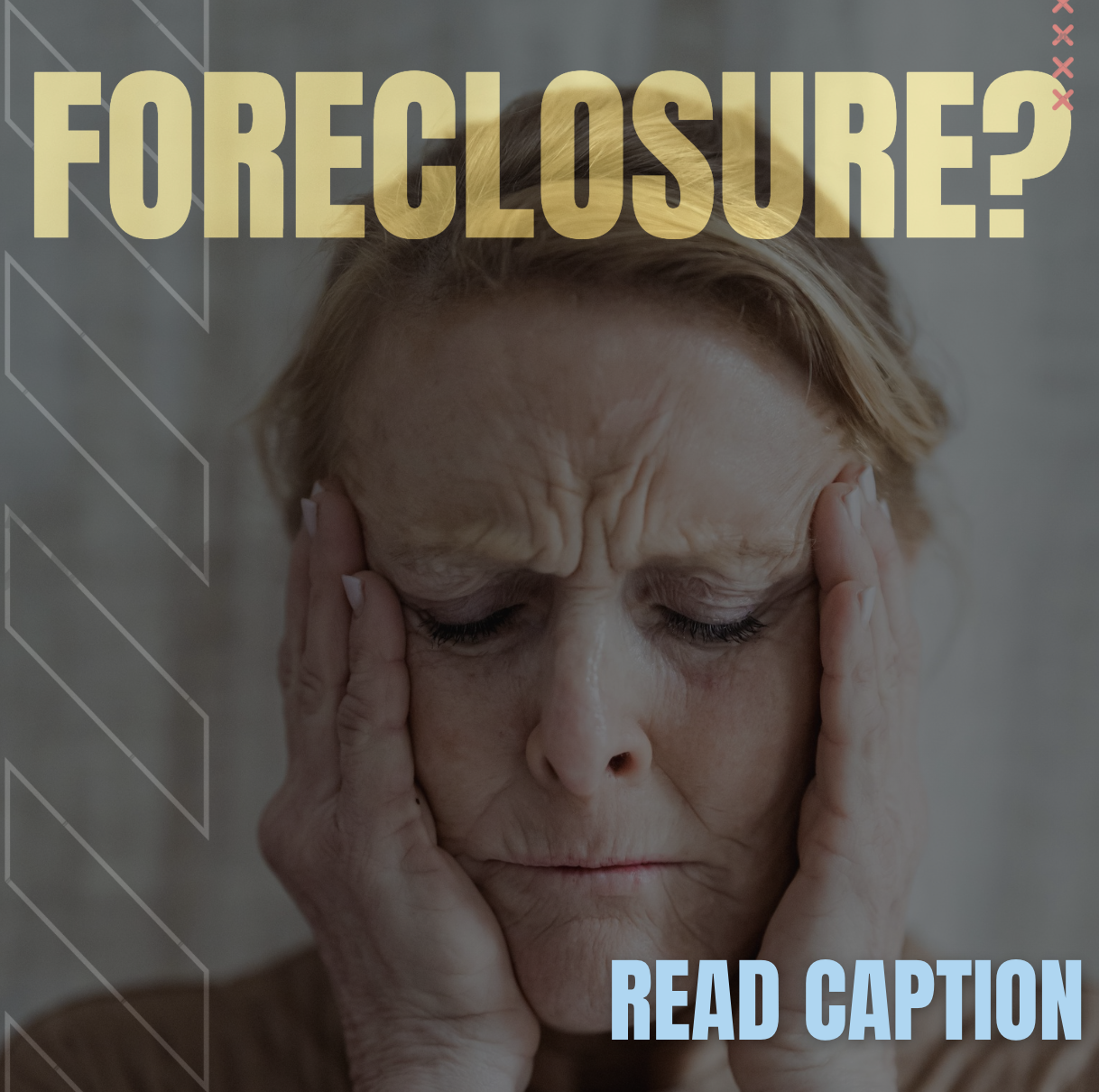
Let me tell you about a woman I’ll call Sarah.
Sarah is elderly and living on a fixed income.
And like almost everyone I talk to who is facing foreclosure, Sarah told me the same thing:
“I want to keep my house.”
I don't blame her.
This is her home. The idea of losing it is scary.
Sarah was considering Chapter 13 bankruptcy because she was about $25,000 behind on her mortgage. She was hoping bankruptcy would give her a way to catch up while keeping the house.
We talked about the numbers.
And that's where things got difficult.
Sarah was already barely able to afford her mortgage on her fixed income.
A Chapter 13 repayment plan would add another monthly payment to her existing mortgage. Based on the numbers we were discussing, that could have been roughly another $418 a month just toward catching up on the arrears—before considering everything else that comes with her monthly budget and the bankruptcy.
The question wasn't simply:
“Can Sarah file bankruptcy?”
She may be able to.
The much more important question was:
“Can Sarah actually afford the life that comes after filing?”
Because if she couldn't afford her mortgage now, adding another required monthly payment could potentially put her right back into the same cycle.
Sarah couldn't simply reinstate the loan.
A loan modification wasn't a realistic solution for her either.
So we had a difficult conversation.
I encouraged her to stop and really look at the numbers.
Not what she wanted the numbers to say.
What they actually said.
And eventually, Sarah chose a different path.
Instead of holding onto the house at all costs, we were able to help her sell it as-is and walk away with a check.
That money gave her something incredibly important:
a chance to rebuild some stability for the future.
Was selling the house what Sarah wanted when we first talked?
No.
But sometimes the thing we desperately want isn't necessarily the thing that puts us in the best position six months or a year from now.
And that's the reason I'm telling you Sarah's story.
I'm not saying everyone facing foreclosure should sell their house.
I'm saying the opposite.
Your situation is different.
Your timeline is different.
Your equity is different.
Your income is different.
And your options may be completely different from Sarah's.
My job isn't to tell you what you should do before I understand your situation.
My job is to listen.
Then I'll help you understand the options that may still be available to you based on how much time you have, what you owe, your financial situation, and what you want to accomplish.
Maybe keeping your house is the right answer.
Maybe bankruptcy is the right answer.
Maybe a loan modification is possible.
Maybe selling the house is actually the best way to protect what equity you have and give yourself a fresh financial start.
But you won't know until you have the conversation.
And the truth is, the longer you wait, the fewer options you may have.
So if you're facing foreclosure, don't sit there hoping it will somehow work itself out.
Click the black button that says “Click Here to Set Up Call with Ryan” below and let's have a conversation.
No pressure. No judgment.
Just an honest conversation about where you are, what's possible, and what might make the most sense for you.